PRP Hair
Platelet-rich plasma, drawn from you and injected into the scalp.
- Thinning at the crown
- Widening parting
- Postpartum shedding
- Weak, fine hair
- Early loss
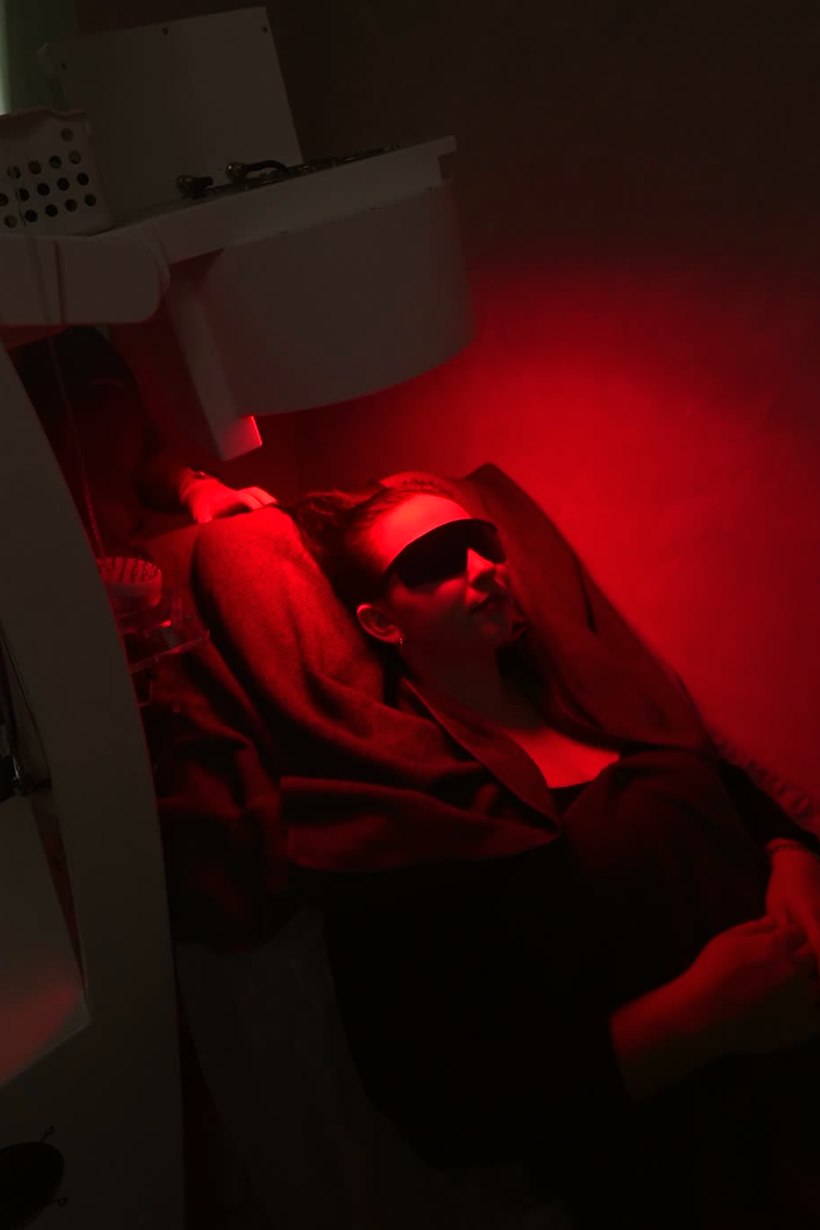
What is PRP Hair?
A small amount of your blood is taken and spun in a centrifuge until the platelets separate out. That concentrate is injected across the thinning area of the scalp, where the growth factors it carries act on follicles that are still alive but producing weaker hair than they used to.
It works on follicles that are struggling, not on ones that have closed. Which of those you have is the thing the assessment is for, and it is the difference between a course that helps and a course that cannot. You should be told plainly which you are dealing with before anything is booked.
PRP acts on follicles that are alive and underperforming. It does not create follicles and it does not reopen closed ones, so a scalp that has been bare for years is not what this is for. It is also not a treatment for every cause of hair loss — thyroid problems, iron deficiency, medication and some scalp conditions all cause shedding and all need a doctor rather than a clinic. Part of the assessment is deciding whether you are in the right room at all.
- Time
- Allow around an hour including the draw and the spin
- Downtime
- Tenderness and small pinpoint marks on the scalp for a day
- Sessions
- A course spaced across months, then maintenance
- Results
- Shedding usually settles first; density changes slowly
- Comfort
- A blood draw, then a series of stings across the scalp
Is this the right treatment for you?
Parting widening rather than patches appearing?
Diffuse thinning is the pattern this suits best. Discrete bald patches are a different problem and may need a doctor.
Would rather use your own biology than a product?
There is nothing in this but your own plasma, which is why it is often the first thing people are comfortable trying.
Shedding since giving birth or an illness?
Say so. Some shedding recovers on its own, and you should not be sold a course for something that was going to settle anyway.
Hoping to regrow a hairline that has gone?
This will not do that. Where the follicle has closed, nothing injected brings it back, and you will be told so.
When it is not appropriate
Pregnancy or breastfeeding, active infection or inflamed skin in the treatment area, recent isotretinoin use, photosensitising medication, and a history of keloid scarring all need to be raised before anything is booked. Tell the practitioner about every medication and supplement you are taking. Blood disorders, clotting problems, blood-thinning medication and active scalp infection all need to be raised, because this begins with taking blood.
What happens in a session
Assess
The scalp is examined and the pattern of loss identified, with baseline photographs taken.
Draw
A small sample of blood is taken, as it would be for any ordinary test.
Separate
The sample is spun so the platelet-rich portion can be drawn off.
Treat and review
The plasma is injected across the thinning area, and progress is reviewed against the baseline photographs.
Still deciding?
Consultation is free. You will be told plainly whether PRP Hair is the right fit, and what to do instead if it is not.
Book a free consultationBefore and after your session
Before
- •Eat and drink normally beforehand — this starts with a blood draw
- •Tell the clinic about blood thinners, including aspirin
- •Come with clean hair and no heavy product
- •Expect baseline photographs; they are what makes the review honest
Aftercare
- •Leave the scalp alone for the rest of the day
- •No hair dye, bleach or harsh product for several days
- •Tenderness is normal; spreading pain or heat is not — call the clinic
- •Keep to the spacing you were given, because the course is the treatment
Why AURA
One clinic in Mandalagan, Bacolod City — the same practitioners every visit.
- •One clinic in Bacolod, so the people treating you are the same each visit
- •Private treatment rooms, one client at a time
- •Consultation before every first-time procedure
- •Devices operated only by trained practitioners
- •Aftercare plan written for you, not printed in bulk
- •Treatment is planned on consultation, after the assessment
PRP Hair, answered
Is it painful?
The injections sting, and the scalp is sensitive. Comfort measures are offered and the pace is adjusted as it runs. Most people describe it as brief rather than severe.
How is this different from Hair Fillers or Exosomes?
All three are injected into the scalp and all three aim at the same follicles. This one uses your own plasma and nothing else. Which suits you depends on what is driving the loss, and that is decided at assessment rather than from a page.
How many sessions before I judge it?
Months rather than weeks, because hair grows slowly. The baseline photographs exist so that judgement is made against a record rather than a memory.
When will I see a difference?
Shedding usually settles before anything else changes, and density follows across months. Three months is the earliest point at which a fair judgement can be made.
How long does it last?
It holds while the course and its maintenance continue. Stopping entirely returns you to the underlying pattern at the usual pace.
Can I combine it with other treatments?
Frequently planned alongside the laser regrowth and, where a doctor has prescribed something, around that. The order and spacing are set at consultation.
Find us in Bacolod
- •Consultation is free, with no obligation to book
- •You are told when a treatment is the wrong fit
- •Treatment is priced on consultation, after the assessment
Bacolod City
2F Sitari Commercial Bldg., C.L. Montelibano Ave., Mandalagan, Bacolod CityMonday to Sunday, by appointment
For bookings and inquiries
Send the form and a booking coordinator will come back to you, or reach the clinic through any of its channels.